Getting there
How to get to the Acropolis
How to reach the Acropolis of Athens: Acropolis metro station, the walk along Dionysiou Areopagitou, the entrances, and routes from the airport and Piraeus.
See tour dates ↗Quick answer
The simplest way to reach the Acropolis is the metro to the Acropolis station, which sits beside the Acropolis Museum. From there you walk along the pedestrian street Dionysiou Areopagitou to the entrances. Monastiraki and Thiseio are the other useful stations. From the airport and from the cruise port at Piraeus the metro serves the centre, and from central Athens most people simply walk.
Start with the Acropolis metro station
The closest metro station to the Acropolis is the one named after it. It stands beside the Acropolis Museum, just below the south slope of the rock. That position is why most visitors use it: you come up already in the museum's quarter, with the rock above you. Syntagma, under the square in the centre of Athens, is the usual place to change trains if your hotel is on another metro line, so look at the metro map for your own starting point before you leave. Have your fare ready before you reach the gates and keep it handy, and follow the signs for the Acropolis Museum to find the right exit. Treat this as the default route and the others as options.
What the Acropolis metro station is like
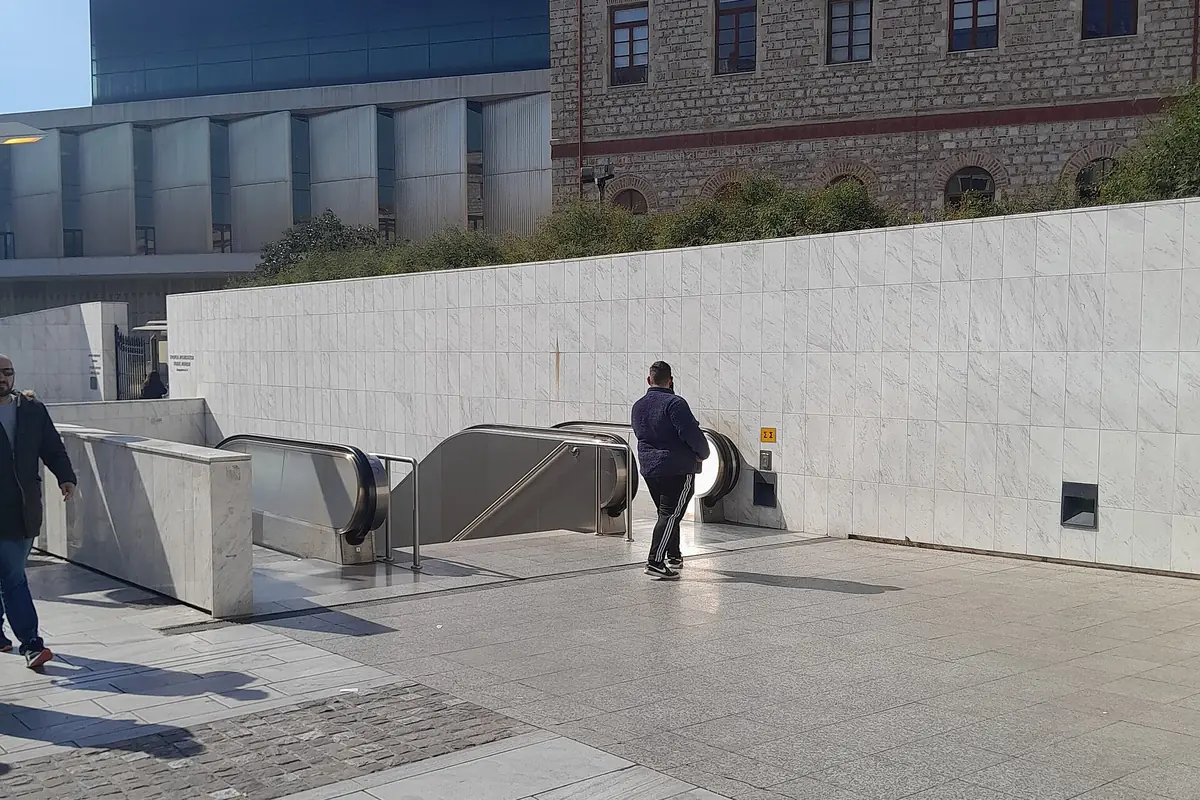
Inside the station, a reproduction of part of the Parthenon frieze is shown on the platforms, and ancient pottery found during its construction is displayed on the concourse. The station serves the Plaka, Koukaki and Makrygianni neighbourhoods, and it is the one metro stop in Athens that already starts the visit before you reach the surface. If you travel with a wheelchair, a pushchair or a heavy bag, look for the lift signs and ask staff on the day, because lifts and escalators are sometimes out of service. If you are unsure which exit leads to the pedestrian street, ask a member of staff before you go up the escalator. Check the exit signs on the platform before you go up, so you do not have to come back down.
The walk along Dionysiou Areopagitou

From the station the way to the rock is the pedestrian street Dionysiou Areopagitou, which runs along the foot of the south slope. Along it you pass the Acropolis Museum, the way into the Theatre of Dionysus and the way into the Odeon of Herodes Atticus, so the walk lets you see the monuments from outside before you go in. The street is closed to traffic, which makes it the best approach on foot. Allow time to stop. The street gives views up to the rock at several points, and the walk is a good moment to drink water before the climb. Wear shoes with grip, because the paving is polished and the slope steepens once you leave the street.
Monastiraki, Thiseio and Syntagma
Three other stations work well. Monastiraki sits beside Monastiraki Square, close to Plaka and next to the site of the Ancient Agora, and it is the right stop if you want to approach through the old town. Thiseio is also within walking distance of the rock, and it suits you if you would rather arrive on foot from a quieter direction. Syntagma, under the central square, is the usual place to change trains. Pick the station that matches your hotel, check the walk on a map before you leave, and keep going on foot rather than taking a taxi for the last stretch, because the streets around the rock are largely pedestrian.
- The Acropolis metro station: the shortest route, beside the museum
- Monastiraki: through Plaka and the old town
- Thiseio: a walk from the other side
- Syntagma: the place to change trains
From Athens airport
Athens International Airport has a station for the metro and the suburban railway, and taxis are available at the arrivals level. Bus lines also connect the airport to the Athens area. For the Acropolis the metro is the simplest choice, but routes and interchanges change, so look at the current metro map or a transport app for the best way from the airport to the Acropolis metro station, Monastiraki or Thiseio. Airport trains have their own fare products. Leave generous time for the trip. If you arrive with heavy bags, drop them at your hotel before you head to the rock, because large bags are not allowed on the site.
From the cruise port at Piraeus
Piraeus is the main port of Athens, so plan the transfer to the Acropolis before you leave the ship. A taxi to the start of Dionysiou Areopagitou is the simplest option if you are short of time, and a transport app will show the best public route from your berth to the Acropolis metro station, Monastiraki or Thiseio. Ships use different berths, so check where your ship docks and how far it is from the station before you step off. If you are on a shore-excursion clock, leave a generous margin, because the return trip to the port takes time as well.
By taxi, bus or on foot from the centre
A taxi or private transfer can drop you at the start of Dionysiou Areopagitou, and from there it is a walk to the entrances. Buses also serve the streets around the museum, so check your route in a transport app. Walking is the best option if you are staying in Plaka, Monastiraki, Thiseio or Makrygianni, because the old quarters ring the rock and the final stretch is pedestrianised. The last part is uphill on stone and marble. Wear shoes with grip, because polished marble is slippery, and carry water. The paths have little shade in the open, so start early or late in summer, and plan your way home before you go up so you are not searching for a taxi in the midday heat.
Which entrance, and what happens at the gate
The main entrance to the Acropolis is on the west side, below the Propylaea. Routes and gates can change on the day, so follow the signs and the instructions of the staff. Entry runs on strict timed slots, so late arrivals cannot be accommodated, and security checks can take half an hour. Admission is one-time: once you leave, you cannot come back in on the same ticket. Bags and large luggage are not allowed, so travel light. If you use a guided tour you cannot join without a valid ticket for the right time, so the slot matters more than the gate. Allow a margin before your slot, and do not leave the walk to the last minute.
Reaching the top with limited mobility
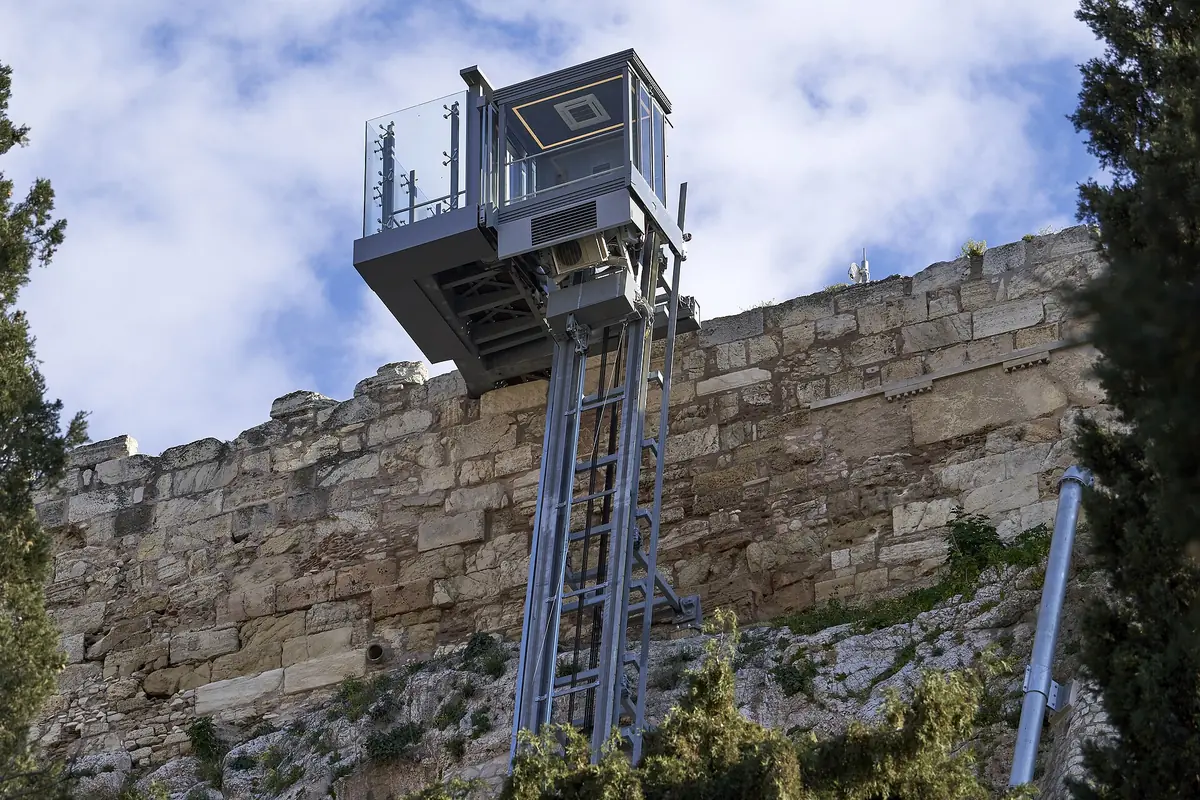
The Acropolis is a steep rock. There is a lift for visitors with reduced mobility. It has to be arranged with the site in advance and may be out of service, so contact the site before you go and check on the day. If walking from the station is too much, take a taxi to the start of Dionysiou Areopagitou and ask the staff what help is possible. A companion can help with the paths, which are uneven and slippery, so allow extra time for the walk and a slower pace on the marble. If the lift is not available, the Acropolis Museum at the foot of the rock is the easier visit.
If you are joining a guided tour
Guided tours name their own meeting points, and these vary by operator and by option. Some start on or near Dionysiou Areopagitou and others near Acropolis metro station, and one tour asks you to arrive 20 minutes before departure. The booking confirmation names the exact spot, so plan your route to that point rather than to the gate, and leave a margin for the walk. Save the meeting-point details offline and check them the evening before, because a late arrival cannot be accommodated. Some tours end at the Acropolis Museum, which puts you beside Acropolis metro station for the ride back. If your tour has a museum leg, you may leave the rock earlier than you expect and finish on the south side.
Who this route guide isn't for
This guide assumes you can walk uphill on uneven marble and cope with open sun. If you cannot, read the mobility section again, plan a taxi to the start of the street and ask about the lift on the day. It also assumes a daytime visit by public transport. If you want a ride from your hotel door to the foot of the rock, a taxi or a private transfer is the cleaner answer than the metro. The guided tours listed on this site do not include transfers from your hotel, so you still plan the journey to the meeting point yourself. If you are unsure, ask your hotel to mark the nearest station and the meeting point on a map.
Frequently asked questions
Which metro station is closest to the Acropolis?
The Acropolis metro station, beside the Acropolis Museum. From there you walk along Dionysiou Areopagitou to the entrances.
Can I walk to the Acropolis from the centre?
Yes. Plaka, Monastiraki, Thiseio and Makrygianni all ring the rock, and the final stretch is pedestrianised. Wear shoes with grip, because the paving is slippery marble.
How do I get there from the airport?
The airport has a station for the metro and the suburban railway. Check a transport app for the best route to the Acropolis metro station or Monastiraki. Taxis are available at the arrivals level.
Is there a lift to the top?
There is a lift for visitors with reduced mobility. It has to be arranged with the site in advance and may be out of service, so contact the site and check on the day.
Where do I get off for the Theatre of Dionysus?
At the Acropolis metro station. The theatre entrance is on Dionysiou Areopagitou, a short walk from the station.
Can a taxi take me to the gate?
A taxi can drop you at the start of Dionysiou Areopagitou. The street is pedestrianised, so you finish on foot.
Sources