Rock or museum
Acropolis vs Acropolis Museum
The Acropolis and the Acropolis Museum are two separate visits with separate tickets. Here is what each holds and how to do both in one day.
See tour dates ↗Quick answer
The Acropolis is the ancient site itself: the temples and gateways standing on the rock. The Acropolis Museum is a separate building at its foot that holds the sculptures taken from the rock, including the Parthenon frieze and the original Caryatids. The two have separate tickets. Visit the rock first, in the cool hours, and use the museum for the middle of the day.
Two places, two tickets
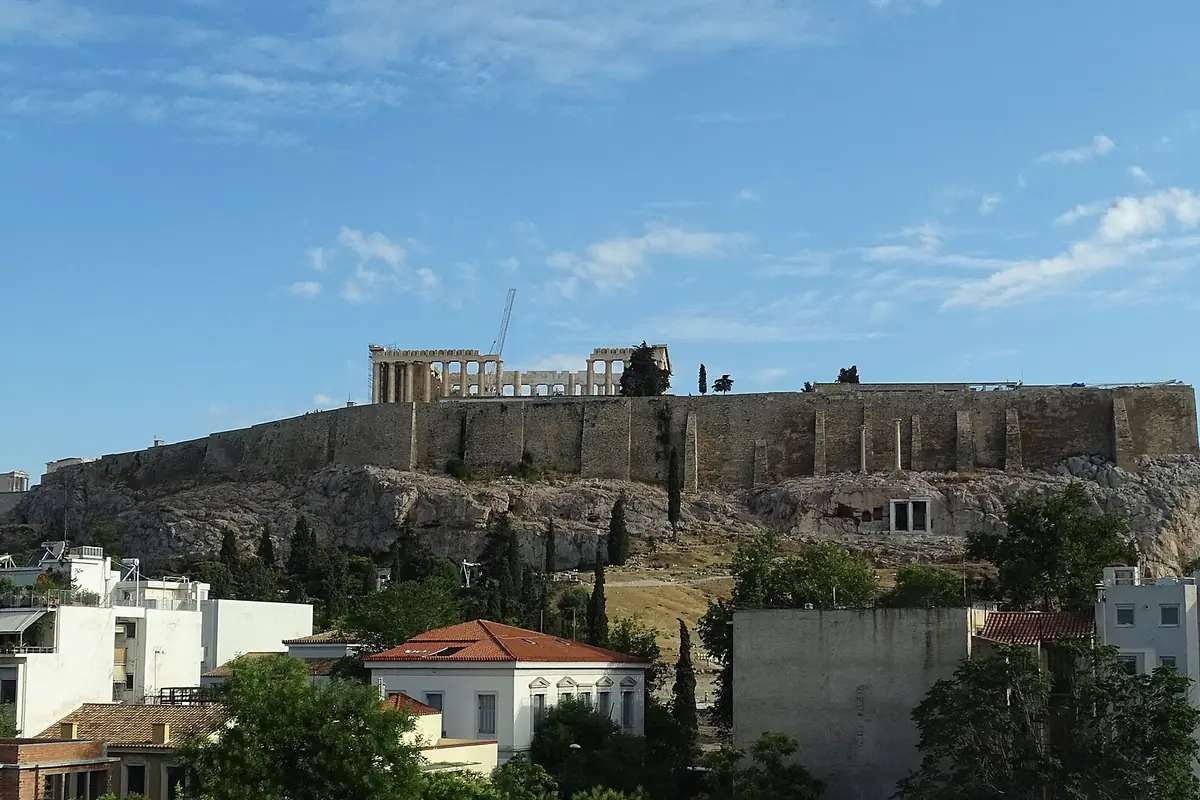
The Acropolis and the Acropolis Museum are separate visits. A ticket to the museum covers all its exhibition areas and the excavation beneath the building, while tickets to the site on the rock are sold separately. The museum stands on the south-east slope of the rock, in the Makrygianni quarter, next to Acropolis metro station, and its address is Dionysiou Areopagitou 15. It lies about 280 metres from the Parthenon, though the walk is longer because it follows the street. Some guided tours combine the two, so the option you choose decides what you get.
What the rock gives you
On the rock the buildings are in place: the Propylaea gateway, the little temple of Athena Nike, the Parthenon and the Erechtheion with its porch of maidens. You see their scale against the sky and the city, and you see how the paths connect them. What you do not see up close is the sculpture, because most of the surviving carvings have been moved indoors for protection. The rock gives you the architecture and the view. It is also the hot, open part of the day, so it rewards an early slot and a hat.
What the museum gives you
The museum opened on 20 June 2009. Bernard Tschumi won the design competition, working with the Greek architect Photiadis. It shows more than 4,250 objects across 14,000 square metres, on three exhibition levels with a middle level for shops, a café and offices. The galleries climb from the finds of the rock's slopes on the ground floor to the Parthenon Gallery at the top. The point of the museum is close looking, with good light and labels, at pieces that were once too high to see on the temples. It also stays open for longer evening hours on some days, which the museum's site lists.
The Parthenon Gallery
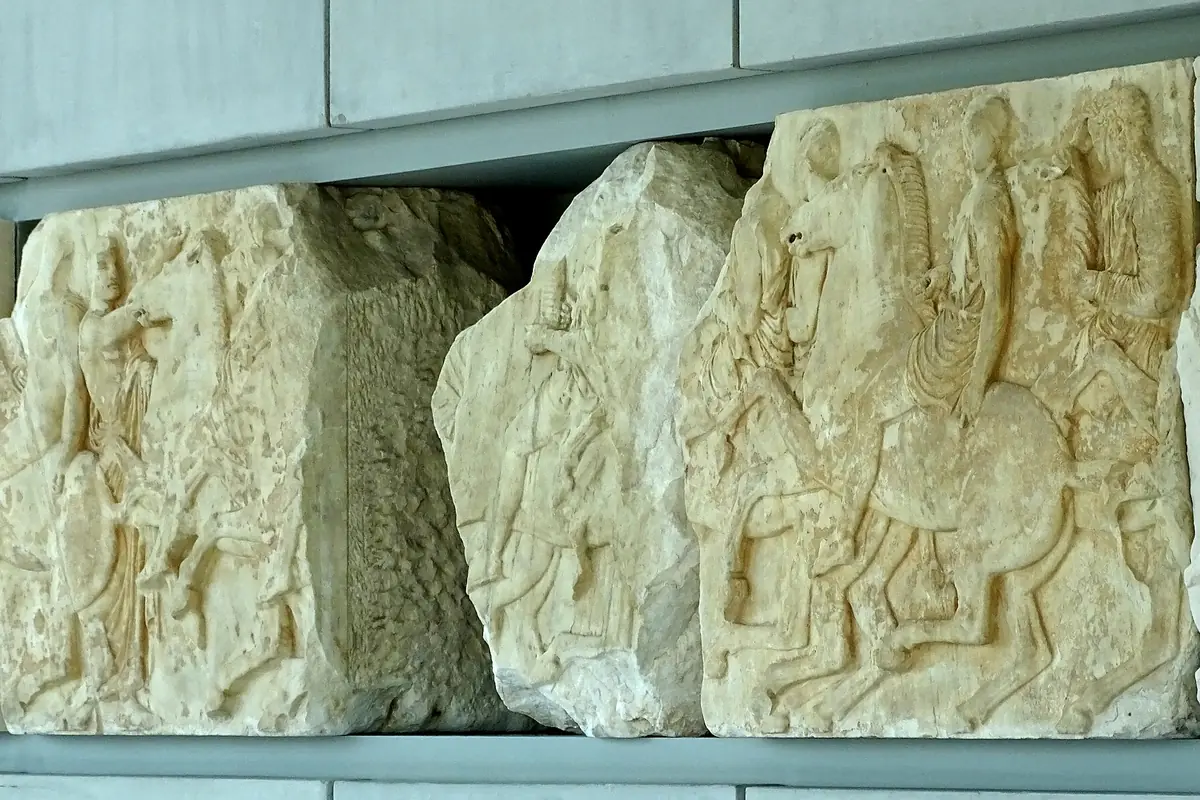
The top level holds the Parthenon Gallery. It has glass walls on all four sides, so natural light falls on the marbles as it did on the temple, and the pediments, metopes and frieze are displayed facing outwards, as they were on the building. Forty-eight columns mark the outline of the ancient temple and form a colonnade for the sculptures. From the gallery the Parthenon is visible on the rock above. This is the best place to understand what the Parthenon looked like when it was new, and it works well straight after the climb.
The Caryatids and the glass floors
Five of the six Caryatids from the Erechtheion's porch are in the museum, and replicas stand in their place on the rock. The sixth was removed by Lord Elgin in the early nineteenth century and is now in the British Museum. The museum won the Keck Award in 2012 for its conservation of the five. Glass floors in the building show the excavation beneath it, and since 21 June 2019 visitors can walk through a neighbourhood of ancient Athens that dates from the Classical era to Byzantine times. Your museum ticket covers the excavation, which you reach from the entrance courtyard.
How to do both in one day
Take the rock first, in the cool hours, and the museum afterwards, when the heat is at its worst. A guided tour of the rock alone takes about 1.5 to 2 hours, while the tour options that add the museum run 3 to 4 hours. The museum asks you to leave large bags and backpacks in the cloakroom and has an X-ray check at the entrance. Photography is allowed in most of the museum, but not in the Archaic Acropolis Gallery, and flash and tripods are not allowed anywhere.
Who this isn't for
If you only have time for one, choose by what you want to see. The rock is the right choice for the buildings and the view, and the museum is the right choice for the sculpture, the Caryatids and the Parthenon Gallery in good light. If you hate heat, the museum is the easier visit. If you cannot manage a steep, uneven rock, the museum has ramps for wheelchairs and strollers at all entrances and lift access on every floor.
Frequently asked questions
Are the Acropolis and the museum on one ticket?
No. The museum ticket covers the museum and its excavation, and the site has its own ticket.
How far apart are they?
The museum is about 280 metres from the Parthenon. The walk follows the pedestrian street Dionysiou Areopagitou.
Where are the Caryatids?
Five of the six originals are in the museum. Replicas stand on the Erechtheion, and the sixth original is in the British Museum.
Which should I visit first?
The rock first, in the cool hours, and the museum later in the day.
Can I take photographs inside the museum?
Yes, except in the Archaic Acropolis Gallery. Flash and tripods are not allowed.
Sources