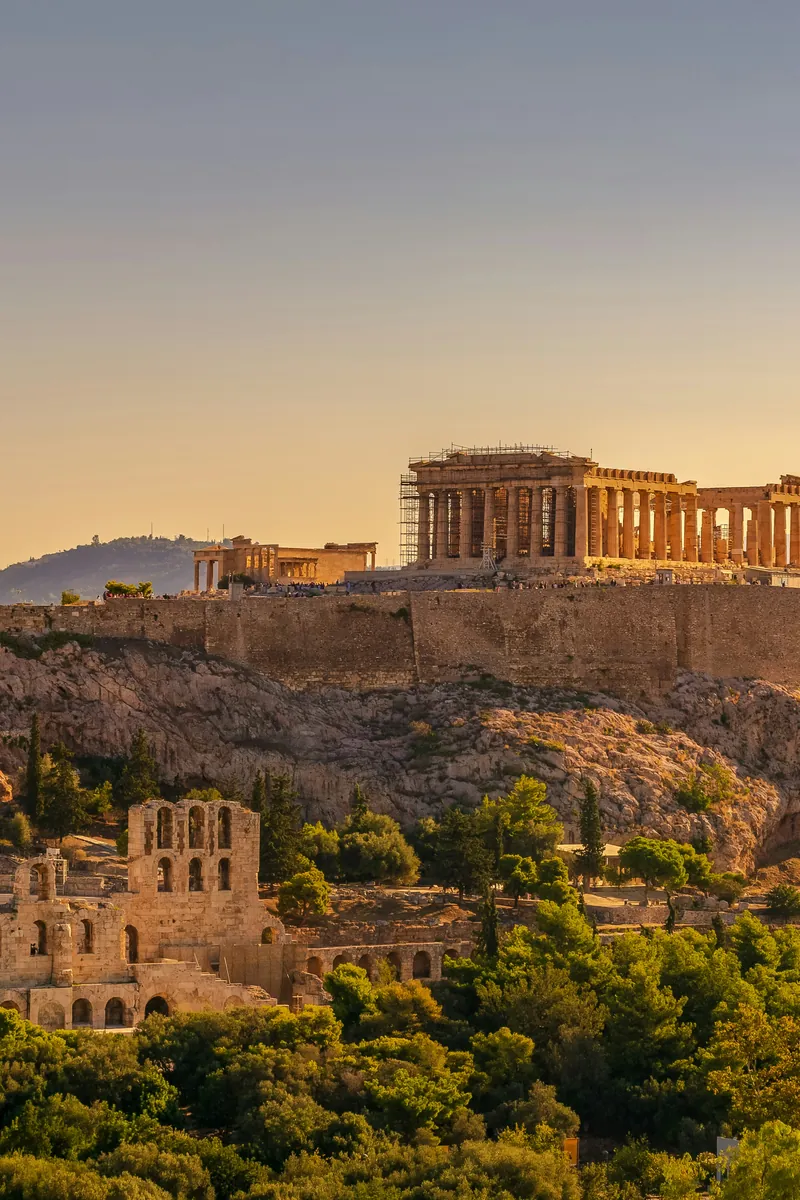
The Acropolis of Athens is the great limestone citadel that rises about 156 metres above the modern city, the sacred rock on which classical Athens built the monuments that came to define Western architecture. Crowned by the Parthenon, it was raised chiefly in the 5th century BC under the statesman Pericles, at the height of Athenian power, as a sanctuary to the goddess Athena and a statement of the city's wealth, art and confidence. It has been a UNESCO World Heritage Site since 1987, and with around 4.5 million visitors a year it is the most-visited archaeological site in Greece.
What you walk up to today is a group of marble masterpieces set on the hilltop: the Parthenon, the temple of Athena Parthenos, built in the Doric order by the architects Iktinos and Kallikrates with sculptural decoration overseen by Pheidias; the Erechtheion, famous for its Porch of the Caryatids, where sculpted maidens stand in place of columns; the monumental Propylaea gateway through which you enter; and the small, elegant Temple of Athena Nike perched on the southwest bastion. Below the south slope lie the Theatre of Dionysus, birthplace of Greek drama, and the Roman-era Odeon of Herodes Atticus. The original Caryatids and the surviving Parthenon sculptures are kept in the Acropolis Museum at the foot of the hill — a separate site and ticket; our ticket is entry to the archaeological site on the rock itself.
The Acropolis sits at the heart of Athens, reached in minutes from the Acropoli and Monastiraki metro stations, its main entrance on the pedestrian avenue of Dionysiou Areopagitou along the south and west slopes. The marble paths are steep and polished smooth by centuries of feet, and the rock is fully exposed to the Attic sun, so early-morning or late-afternoon slots are far kinder than the middle of the day. Because entry is timed by the hour and the prime slots go weeks ahead in summer, we handle the ticketing in your own language and reserve the slot you want, so you can give your energy to the monuments instead of the queue.