Timing
Best time to visit the Acropolis
When to visit the Acropolis of Athens: the cooler months, the best hour of the day, heatwave closures, timed entry, daily caps and winter visits.
See tour dates ↗Quick answer
The best time to visit the Acropolis is outside the Athenian summer: April to June and September to October give the gentlest walking weather. In every season the first slots after opening and the last before closing are the coolest and least crowded part of the day. July and August are hot, and the Ministry of Culture has closed the site in the afternoon during heatwaves. Entry runs on timed slots, so choose your hour on purpose.
The short version
Pick spring or early autumn if you can, and pick the first or the last slot of the day whatever the month. The Acropolis is an open rock of polished marble with almost no shade, so the weather and the time of day matter more here than at an indoor museum. Athens has a hot-summer Mediterranean climate, which makes the months on either side of summer the easier ones for walking. In July and August the ground gives back the heat, and the Ministry of Culture can close the site during the hottest hours of a heatwave, announcing it on the day. Plan the museum for the middle of the day and the rock for the edges.
Spring, from April to June
Spring is the season most visitors are happiest with. Because Athens has a hot-summer Mediterranean climate, the months before the heat arrives let you climb, stand and read the monuments without rushing for shade. Spring also gives you long daylight, which means the final entry slot of the day still leaves time to see the Parthenon in low light. The trade-off is crowds. Mild weather does not mean empty paths, so the first slot of the morning is still the sensible choice. Pack a light layer for it. Book the date as soon as your plans are fixed, because slots are limited.
Summer, in July and August
Summer is the hard season. Athens has a strong urban heat island effect, which makes hot days hotter still. On the rock there is little shade, and marble reflects the sun, so a midday visit in July can be an endurance test. If you must come in summer, take the first slot after opening or the last slots before closing, carry water, wear a hat and use sun protection. The Acropolis closes later in summer than in winter, so the late slot is a real option. Avoid the middle of the afternoon, and be ready to change plans if the weather turns extreme. Drink before you feel thirsty, and take your rest in whatever shade you find.
When the Ministry closes the site
In heatwaves the Ministry of Culture has closed the Acropolis during the hottest hours of the day. The decision is made on the day and announced publicly, so there is no fixed schedule to rely on. If you visit in a heatwave, check the Ministry's announcements that morning and keep a flexible plan for the closed hours, such as a museum visit. The Acropolis Museum is the natural fallback, because it is indoors. A closure in the middle of the day leaves the early and the late hours as the windows that still work, so booking the first slot of the day gives you the best chance of being on the rock before any closure. Pack water and a hat anyway.
Autumn, September and October

Early autumn is the other good window. The strongest heat has passed, the light is lower and the monuments look warmer. The site's closing time moves earlier as the days shorten, so check the closing time for your date before you plan the last slot, and check it again in the week you travel. Last entry is shortly before closing, so check the time for your date. The weather can still be hot in September, so the early slot stays the best choice for comfort. By late October the evenings draw in, and the Acropolis Museum, which keeps its own opening hours and has its own ticket, makes a natural second half to the day.
Winter, from November to March
Winter has the shortest opening hours, so the whole visit has to fit into a smaller window. Snowfall is relatively uncommon in Athens and usually does not disrupt daily life, so you are far more likely to meet rain and wind than snow. Rain makes the marble slippery, so choose shoes with real grip, and dress in layers with something waterproof on top. Strong wind can stop the lift. If you want the rock with fewer people around you, winter is when to try, but check the closing time for your date, because it is earlier than in summer. Summer, not winter, is the season that needs the most planning, so use winter's flexibility to choose your hour.
The best hour of the day
The Acropolis is busiest in the morning, when most visitors arrive soon after opening, and entry is limited by the hour. That is the pattern to plan against. Pick a slot you can reach comfortably, because rushing uphill in the heat is a worse start than a slightly later slot. The first slot after opening is popular because it is cool, so the late afternoon can be calmer, while the last slots before closing are quieter again and give the low sun that photographers like. Last entry is shortly before closing, so check the time for your date. If you join a tour, ask the operator which departure suits the season, and arrive at the meeting point on time, because the site does not wait for late arrivals.
Timed entry and the daily cap
The Acropolis runs on timed entry. In August 2023 the Greek government announced a cap of 20,000 visitors a day, with hourly limits that vary through the day, and the Culture Minister said the rules would become permanent from 1 April 2024. The limits exist to prevent bottlenecks and overcrowding on the narrow paths. The practical advice is simple: choose a date and an hour, book it, arrive inside it and keep the ticket ready for the scanner. A guided tour includes entry only on the options that list tickets, so check the option you choose. Do not plan to buy at the gate in peak season, because the slot you want may be gone.
Light, photographs and scaffolding
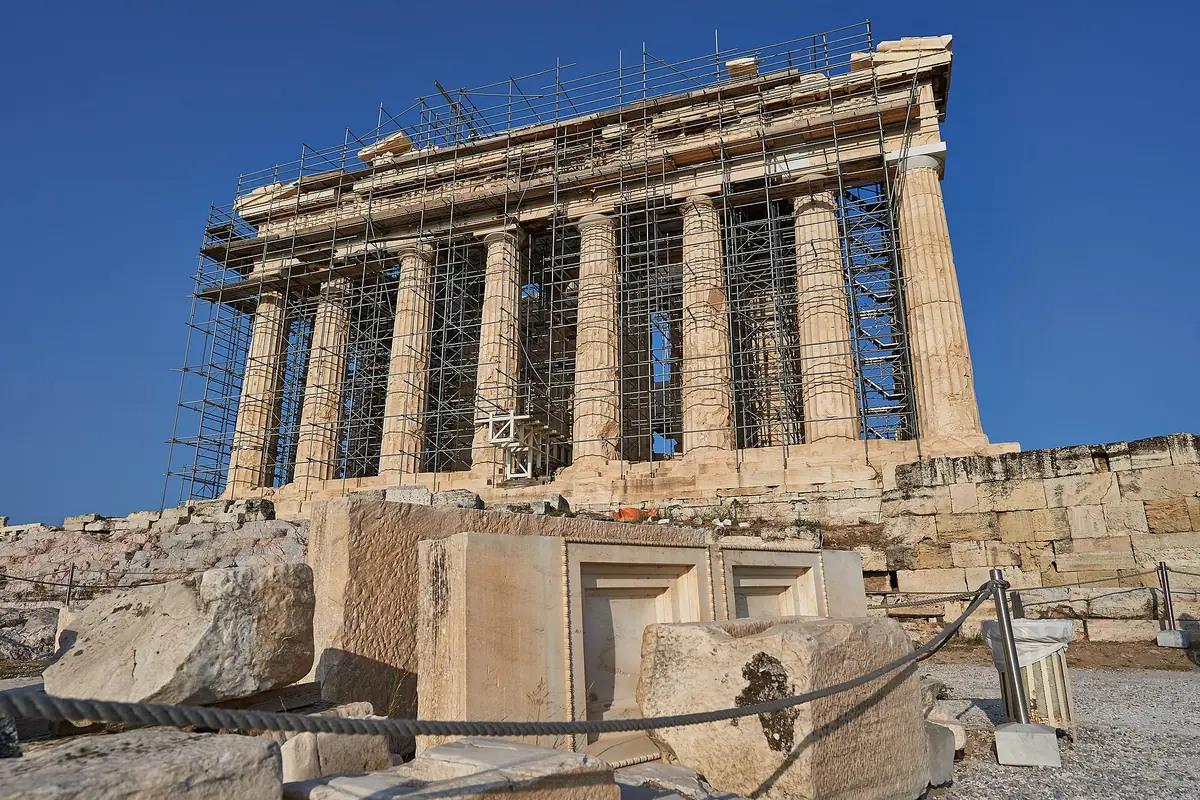
Low sun warms the marble and softens the shadows, so the first and last hours of the day also give the better photographs. Be ready for scaffolding. The Acropolis Restoration Project began in 1975, and parts of the monuments are covered while work continues. A caption on the Acropolis article records that the scaffolding on the Parthenon's west front was removed after 15 years, but other works continue elsewhere on the rock. Do not count on an uncluttered view of any one building. Look for the angle that works on the day, and accept that restoration is part of the monument now. Charge your phone before you go up, so you do not run out of battery during your slot.
Free-entry days and holidays
Greece has free-entry days, and the Ministry sets them. The guided tour with ticket options adjusts its price on those days so you are not charged for tickets, and the Acropolis Museum lists its own free days on its site. Orthodox Easter changes the museum's hours: it opens for shorter hours on Good Friday and Holy Saturday and stays closed on Easter Sunday. Check the dates before you fix your day, because a holiday can change opening hours at short notice. If your dates are flexible, a weekday outside a holiday is the simpler choice. One ticket-only option cannot be moved once booked, so check the forecast for your date before you buy it. If your dates are fixed, choose the hour carefully and bring extra water.
Who this timing advice isn't for
This advice assumes you can choose your dates. If you are on a cruise call, a school trip or a fixed-date tour, you cannot pick the season, so put your effort into the hour instead. Take the first slot of the day, bring water and a hat, and keep the Acropolis Museum as your plan for the hottest hours. Book the slot early, and check the forecast again two days before. If you have limited mobility, check the lift's status on the day. The Acropolis Museum stays open later on Fridays, so a late slot on the rock can be followed by an evening there. Nothing in this guide replaces the Ministry's announcements on the morning you go.
Frequently asked questions
What is the best month to visit the Acropolis?
April to June and September to October. Athens has a hot-summer Mediterranean climate, so the months either side of summer are the easiest for walking.
What time of day is best?
The first slot after opening, or one of the last slots before closing. Mornings are the busiest part of the day.
Does the Acropolis close in hot weather?
It can. In heatwaves the Ministry of Culture has closed the site during the hottest hours, so check its announcements on the day.
Can I visit in winter?
Yes, with shorter opening hours. Rain makes the marble slippery, and wind can stop the lift.
Do I need a timed slot?
Yes. Entry runs on timed slots with hourly limits, and late arrivals cannot be accommodated, so book a date and arrive inside your hour.
When is the last entry?
Shortly before closing. Closing time changes with the season, so check your date.
Sources