Families
The Acropolis with kids
Visiting the Acropolis with children: what to bring, what stories hold their attention, strollers, heat, the museum and how long to stay on the rock.
See tour dates ↗Quick answer
The Acropolis suits school-age children who can climb steps and cope with sun, and it is a poor fit for babies and toddlers. The paths are steep, uneven marble with little shade, and baby strollers are not allowed on the rock. Bring water, hats and shoes with grip, keep the visit short, and tell the stories: Athena and Poseidon, the Caryatids, the theatre. The Acropolis Museum is the easier half.
Is the rock right for your children

The rock is a climb, not a stroll. The way up is steep, the paving is polished marble that gets slippery, and the open top has almost no shade. Primary-school children who like climbing usually manage it, and teenagers usually find it more interesting than they expected. Toddlers and babies find it hard, and one of the guided tours lists children under 6 as not suitable. If your child tires quickly, plan to see the Propylaea and the Parthenon only, then go down, rather than trying to cover every monument.
What to bring, and what to leave
Pack comfortable shoes, a hat, water and sun protection, and carry a copy of ID if your children have reduced or free entry. Baby strollers are not allowed on the Acropolis, and neither is large luggage, so use a baby carrier or leave the pushchair at your hotel. Food and drinks are on the not-allowed list for some tickets, so carry water only. Keep your bag small, because security checks can take half an hour or more.
Tell the stories first
Children remember stories better than dates. Start with the contest in the myth: Athena and Poseidon competing to be the patron of Athens, with Athena offering the olive tree. At the Erechtheion look for the marks that were once said to be the trident of Poseidon. Then show them the Caryatids, six female figures that hold up the porch, and tell them that one of the six now lives in London. Those details turn a pile of stones into a place they can picture, and they take two minutes each to tell.
What children notice
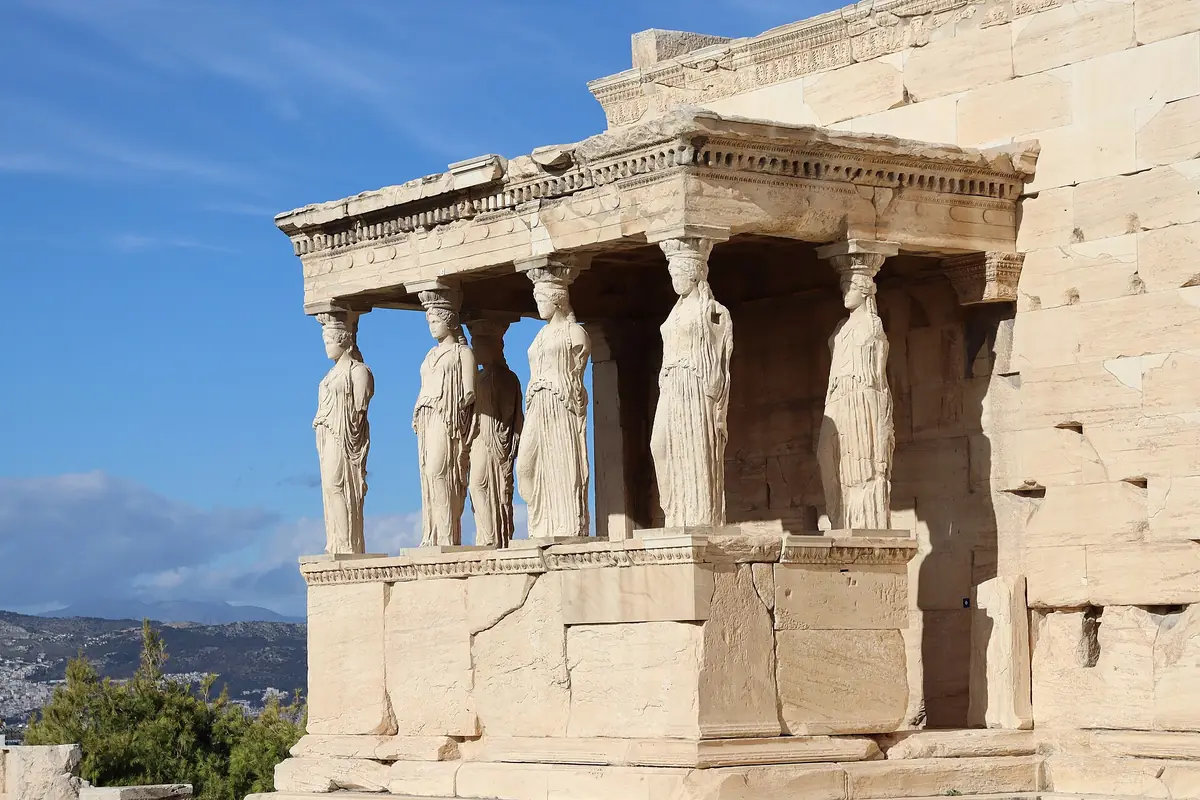
Young visitors notice the columns, so count them: the Parthenon has eight across the front and seventeen along each side. They notice the size of the stone blocks, the worn steps near the Propylaea and the Theatre of Dionysus, where front-row seats were carved as stone thrones for important people. The Odeon of Herodes Atticus, seen from the rock, looks like a Roman arena. Give older children a task, such as counting the columns or spotting the scaffolding, and they stay interested for longer.
The museum is the easier half
The Acropolis Museum has ramps for wheelchairs and strollers at all entrances and lift access on every floor, so it works for families with pushchairs. A family audio guide is available, and the glass floors that show the excavation below hold children's attention. The restaurant overlooks the Acropolis and the café has a view of the excavation. Food and drink are not allowed in the galleries, and large bags go in the cloakroom. A museum visit after the rock gives children shade, space and something to look at when the heat tires them.
Heat, timing and cost
Go early or late in summer, because children feel the heat sooner than adults. Take water breaks in the shade near the lower paths and leave when the first signs of tiredness appear. Entry rules for children depend on age and nationality, and the museum lists its own free and reduced categories, such as free entry for EU residents under 25 and for non-EU children under 5. Check the categories for your family before you book, and carry a passport or ID. If a guided tour has no child price, ask the operator.
Who this isn't for
This is not the right visit for babies in strollers, for toddlers who need a nap in the heat or for families who cannot manage a steep climb. A guided tour that runs two to four hours is also long for small children, so book the shorter rock-only option if you want a tour, or go on your own for an hour. If your children are very young, spend the time at the museum and the pedestrian street below instead, and let the rock wait for another trip.
Frequently asked questions
Can I take a stroller on the Acropolis?
No. Baby strollers are not allowed on the rock, so bring a baby carrier.
What age is the Acropolis suitable for?
School-age children manage best. One guided tour lists children under 6 as not suitable.
How long should we stay with children?
About an hour or two on the rock is plenty, then the museum or a shaded street.
Is the museum easier with kids?
Yes. It has ramps and lifts, a family audio guide, and the glass floors over the excavation.
Do children get free entry?
It depends on age and nationality. Check the categories for your family before you book.
Sources